Project-Specific Design
Airflow, room geometry and intended use inform the system selection.

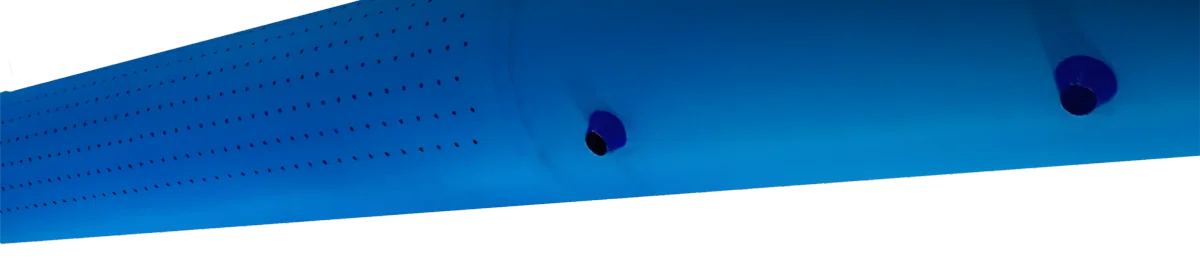
LUFTEX supplies fabric air ducts and textile air distribution systems for professional HVAC applications. System design is matched to each project's airflow, room geometry and operating requirements.
Function meets design


We show you how our customers solved complex challenges with textile air distribution – from cleanrooms to logistics halls
View ReferencesOur References
A selection of customers and successfully delivered projects


Depending on the project, LUFTEX systems can be designed for supply or extract air and for heating or cooling applications. Air is supplied through the fabric surface or defined openings. The airflow pattern, volume and mounting concept are selected for the room geometry and its use.

The system is selected for the required airflow, room geometry and intended air distribution pattern.
Find Your Solution
Flexibility that simply works. Rigid ducts are yesterday. With ExVent, you handle exhaust air easily, quickly and completely adaptably – perfect for your dynamic spaces.
Plan Flexibly Now
Efficiency up, downtime down. FrostGuard optimizes the defrost process on your evaporators. That means for you: Less ice, less energy loss and trouble-free operation.
Increase Efficiency
Support from A to Z. We support you from planning through maintenance to technical support. So your system stays at peak performance long-term.
Ask the ExpertsPlanning, installation and operation aligned with project requirements.
Airflow, room geometry and intended use inform the system selection.
Cable, rail and wall options are available depending on the system and building requirements.
Installation guides, technical documents and washing service support planning and operation.
LUFTEX provides fabric air outlets and air distribution systems for supply and extract air in professional HVAC applications. Systems are selected for each project and can also be designed for heating or cooling applications. Products and systems.
The systems are used in industrial and commercial buildings, including production, food processing, storage and logistics facilities. They are intended in particular for HVAC consultants, engineering firms, contractors and technical operators who align the air distribution concept with the requirements of each project.
Depending on the fabric and system design, air is supplied through the fabric surface or defined openings. Outlet patterns can provide area-wide or directed airflow, or be selected for a required throw; system selection also considers airflow, room geometry and use. Air distribution concepts.
Fabric air outlets are lightweight and can be installed using cables, rails or wall mounting, depending on the building and system. Fabric selection, cleaning and care should follow the requirements of the application and the applicable product instructions. Technical advice and a washing service support planning and operation. Installation options / Washing service.
LUFTEX textile air outlets are air-guiding systems made of technical fabrics that are used to distribute supply or exhaust air in rooms.
Depending on the design, air is released either through the fabric surface or through defined outlet openings into the room. The specific operating principle is tailored to air distribution requirements, room usage and geometry.
LUFTEX air flow concepts differ in the way air is discharged, the throw distance and the flow characteristics. The goal is to enable a suitable combination of comfort, throw and air guidance depending on the application.
The concepts range from broad and draft-free air distribution to perforated outlets with defined throw range and directed air guidance with high throw distance. Airtight systems with defined air discharge are also possible.
The different flow models can be combined within one system. This makes it possible to account for different requirements such as comfort, throw or condensation behavior within a project.
Typical selection criteria: The choice is generally based on room height, use case and air distribution requirements.
LUFTEX systems can be designed for both heating and cooling applications.
Specific suitability depends on project-specific design, air routing and temperature differentials. In many applications, systems are designed for year-round operation.
Yes, LUFTEX offers ExVent as a solution for textile exhaust air routing.
Exhaust air is discharged through textile systems. Depending on the application, this can offer advantages in air routing, moisture resistance and overall system integration. The specific design is project-specific.
The defrost process can be supported by using FrostGuard.
FrostGuard is designed to retain warm air in the air cooler chamber during defrosting and thereby support the process. The actual effect depends on operating conditions and integration into the overall system.
Yes, with PremiumFlex LUFTEX offers a solution that can maintain a defined shape even without air supply or during partial-load operation.
Shape stability is supported by aluminum rings or semi-rings and is especially relevant where consistent geometry and a clean visual appearance are required.
The evaluation should always be made in the context of the specific project.
| Criterion | LUFTEX textile air outlets | Conventional sheet metal ducts |
|---|---|---|
| Weight | Low dead weight | Higher dead weight |
| Installation | Easy handling | Often more effort required |
| Air distribution | Can be designed for broad or targeted discharge | Point discharge via outlets |
| Hygiene | Washable Go to wash service | Cleaned while installed |
| Flexibility | Adaptable to project requirements | More limited |
Under certain conditions, LUFTEX systems can influence the occurrence of condensation.
Depending on the version, the fabrics used are diffusion-open, which means moisture can behave differently than on closed surfaces. Whether additional measures are required depends on temperature, humidity and operating conditions.
LUFTEX textile air outlets are sound-absorbing due to their fabric structure.
They absorb incoming sound waves, reduce reverberation and help prevent disturbing resonances. Thanks to flexible material properties and precise outlet geometries, the system also operates almost silently and actively attenuates noise transmitted from the ventilation unit.
In many cases, LUFTEX air outlets are designed for external cleaning.
Cleaning typically involves removal followed by a washing process. Specific intervals and procedures depend on use and operating conditions.
LUFTEX systems are used in applications with increased hygiene requirements.
Examples include food processing areas, cleanrooms or other controlled environments. Specific suitability is always assessed in the context of the project.
Yes, LUFTEX textile air outlets meet fire protection requirements.
All materials meet the requirements of EN 13501-1. The specific classification is verified and documented on a project basis.
LUFTEX air outlets are typically installed using rail or cable systems.
These fastening systems enable flexible installation as well as removal for maintenance or cleaning.
Depending on the version, LUFTEX offers different color and design options.
The specific selection depends on material, application and project requirements.
The service life of LUFTEX systems depends on operating conditions, use and maintenance.
With proper application and regular care, textile air outlets can be used for many years.
Tender texts are prepared project-specifically by LUFTEX and made available at short notice on request.
This makes it possible to align the content with the relevant technical requirements, design parameters and project conditions.
An initial technical assessment can usually be provided at short notice once the relevant project data is available.
After technical clarification, a quotation can be prepared within about 24 hours. Actual turnaround depends on the scope and complexity of the project.
LUFTEX systems are used across different industries depending on the requirements for air distribution, hygiene and room usage.
Typical applications include industry, logistics, food processing, retail areas, offices as well as sports and special-purpose buildings. Specific suitability is always assessed in the project context.